


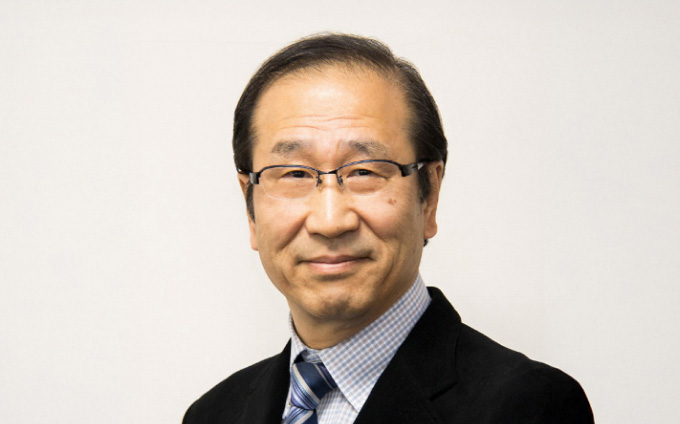
Professor Susumu KITAGAWA
Executive Vice President of Kyoto University
Distinguished Professor
Deputy Director of Kyoto University Institute for Advanced Study (KUIAS)
Nobel Laureate in Chemistry(2025)
Kyoto University
Professor Susumu Kitagawa is a Japanese chemist known for his development of metal-organic frameworks (MOFs), a class of highly porous materials created by coordinating metal ions with organic linkers. Due to their extraordinary porosity, these advanced crystalline materials possess vast surface areas that enable high-efficiency gas capture and storage, which have significantly advanced gas-adsorption technologies. For his contributions to the development of MOFs, he was awarded the 2025 Nobel Prize in Chemistry, shared with chemists Richard Robson and Omar M. Yaghi.
Kitagawa completed his entire higher education at Kyōto University, receiving a bachelor’s degree in 1974 and a PhD in 1979, both in hydrocarbon chemistry. Following his doctoral studies, he began his academic career as an assistant professor at Kindai University before serving as a professor at Tokyo Metropolitan University. During this time, in the early 1990s, he made notable advances in the creation of porous materials known as coordination networks.
In 1997, Kitagawa and his colleagues generated an MOF with a built-in tongue-and-groove design that facilitated the adsorption of small gas molecules, such as nitrogen and oxygen, at room temperature. This work convincingly demonstrated that coordination polymers can possess permanent porous structures with gas adsorption capabilities.
In 1998, he returned to Kyōto University, where he continued his foundational work on gas adsorption. That year, he proposed a classification for MOFs, which he later expanded to include first through fourth generation MOFs, marking their evolution from unstable, nonporous frameworks to stable, porous, flexible, and finally, complex hybrid materials with tunable structures and properties. He subsequently pursued investigations into flexible MOFs, or soft porous crystals, which hold significant promise for real-world applications in areas such as catalysis, gas storage, and environmental remediation.
Kitagawa's main research field is inorganic and material chemistry, in particular, chemistry of coordination space, and his current research interests are centered on synthesis and properties of porous coordination polymers/metal-organic frameworks.
Kitagawa has received numerous awards and recognitions throughout his career, including the Chemical Society of Japan Award (2009), Thomson Reuters Citation Laureate in Chemistry (2010), Medal with Purple Ribbon (2011), Kyoto University Shi-Shi Award (2013), and Fellowship of the UK Royal Society of Chemistry (2013). Additional honors include the Leo Esaki Prize (2013), Japan Academy Prize (2016), Fred Basolo Medal (2016), Fujihara Award (2017), Chemistry for the Future Solvay Prize (2017), and Honorary Membership of the Chemical Society of Japan (2017). In 2018, he received the Grand Prix de la Fondation de la Maison de la Chimie, followed by the Emanuel Merck Lectureship Award (2019) and membership in the Japan Academy (2019). He was honored as an Honorary Member of the Japan Society of Coordination Chemistry (2021) and became a Foreign Member of the Royal Society (2023). Most recently, he was awarded the Kyoto Prefecture Culture Prize for Outstanding Contribution (2025) and recognized as a Person of Cultural Merit and recipient of the Order of Culture (2025), in addition to the Nobel Prize in Chemistry (2025).